The Three Ds of To-Dos

Inevitably a few things on each to-do list get left behind, others are crossed out before you even begin. Kick those poor listing habits with these maximizing listing tips.

With the end of 2016 only 10 days away, I’m not the only one making a list and checking it twice!

christmas holly decoration

The beginning of a new year is a time to focus on new challenges and goals. To get to that point, a well crafted To-Do list can help you wrap up any lingering projects or tasks. A To-Do list is an important tool for focusing on what needs to get done. If I don’t have a list of priorities, I find myself reorganizing my office bookshelf, distracted by songs from the neighboring classroom, or endlessly checking email.

Some hyper focused leaders put 1, that’s right ONE, thing on the to-do list. This 1 task becomes the priority; when it is completed, a new “list” is made. Now, this strategy doesn’t work for me because I need a comprehensive list of what needs to be done by a certain date. That brings me to the first rule of the To-Do: Have a deadline. If you put something on the list that needs to be done by the end of the week and other that can be done later it disrupts the focus of working through the list. Anything that doesn’t need to get done this week, should not be on the list. Instead, put it on your calendar for the week it is due. The To-Do list is not for long term projects.calendar

After I generate a list, I go through and delegate. Inspired by this Rory Vaden podcast. Many things on the list can be delegated to staff, board, or other team members. Nothing is going to be exactly how you would do it. So take off the perfectionist hat and let it go.

via GIPHY

We all think differently, and so when you delegate a task it might be completed differently. Change your mind set and see this is an opportunity. Someone now has the chance to do it better, more efficiently, or creativity. If you have expectations for the task, then it is your responsibility as delegator to give explicit directions. If you really want the chairs to be in a semi circle instead of rows, leave clear instructions. If you arrive and the semi circle is there, but the chairs are too close together (see the meme above) and think of the wins you just achieved. Congratulations: the chairs are ready and someone else took their time to set them up. Be grateful. If you want it done differently next time thank them now, and the next time it’s on you to delegate the task with better directions. If you try to amend their behavior now, you hurt his/her motivation for later.

Save your perfection points for when it counts. I hate to break it to you, perfection often goes unnoticed. Keep in mind, attention to detail is still important, so you must strike a balance. Recently, we sent out some year end letters. I wanted the letters to be hand addressed, and “teacher handwriting” is the expectation I have for anything penned, so I did that component. The rest of the process: printing, trimming, assembling, and posting was done by a team member. We assembled one packet together and then she did the rest. They were absolutely fine without me. If the task can get done 80% as well as you think you would have done it, then delegate it!  Running a non-profit school is like running a business. Crossing these disciplines can help maximize. The 80 percent rule is a business principle I learned from Forbes.

todo

My final rule of To-Do’s is to only put authentic tasks on your list. You’re probably checking your email daily, no need to write that on the list. This list is intended to direct focus onto what isn’t a habit.


If you are listing out your final days of work in 2016, keep the three Ds of To-Dos in mind:

1- deadline: place tasks on the list with a similar time frame

2- delegate: trim your list by assigning tasks

3- direct: focus your list on priority topics that are not habitual

Continue Reading

Food Free Teaching: Case 1

I still remember his face on a Friday. Andrew was a cheerful first grader. He kept his cubby tidy, had friends and cousins in his class, loved experiments, and especially connected with the sweet librarian at our school. Each morning Andrew came in and sat at the breakfast table with the other first graders before coming to start on “wake up work” and handwriting. Throughout the week, he was a reliable and even keeled guy, quick on the playground, and loved being the line leader.

books

Like clock work, on Friday afternoon, Andrew’s behavior changed. He would cry and kick his shoes at me. He shoved and spit at his friends. I puzzled about what could be going on in his world. I met with his mother, who said nothing was different about Friday. I wondered, if he was bullied on the bus? Was he exhausted by Friday after a full week of school? Friday was the only day Andrew took the bus home, on the other days he attended the after school program, so I blamed it on that. I helped get him a 6th grade “bus buddy” and decided that would be the best solution.

 bus-school-school-bus-yellow-159658

Months later, on a Saturday afternoon, we offered a literacy day at my university. Many children from a variety of schools attended, including my buddy Andrew. I was so glad to see him! We all had a splendid time. At the end of our reading time, I noticed a friend and super-teacher putting left over granola bars  in Andrew’s backpack. It hit me like a ton of bricks. He might have come for stories, but he certainly came for nourishment. Thank goodness for this educator who saw a hungry kid and decided to help.

Andrew spent most of his weekend hungry, until he returned to school on Monday and had breakfast. On Friday, he knew it was coming and so he began to shut down. That was the root of his change in behavior.

I learned the hard way that you can’t feed every hungry student, or give shoes to every child who needs them (another story for another time). What you can do- is connect families with resources and make school a safe and supportive place.

My time with Andrew impacted how I used food in the classroom. Suddenly, math time with m&m’s for counters, pudding in the sensory table, and pasting pasta on paper were entirely insensitive teaching decisions. To children with limited access to food, playing or wasting it is unfair.

ginger

Around holiday time families are stretched for resources. Food can become a sensitive matter. Many families refuse the help of free or reduced lunch, don’t complete the paperwork, or think their struggle will be temporary. Some older children would rather go hungry than hold the pink free lunch ticket in line. Teachers, you are one the front line to see who in your class might be hungry. If you suspect you have a hungry student talk to them!


Continue Reading

It’s Madeline, It’s Madeline

In an old house in Paris that was covered with vines,

lived twelve little girls in two straight lines

They left the house, at half past nine…

The smallest one was Madeline

.madeleine

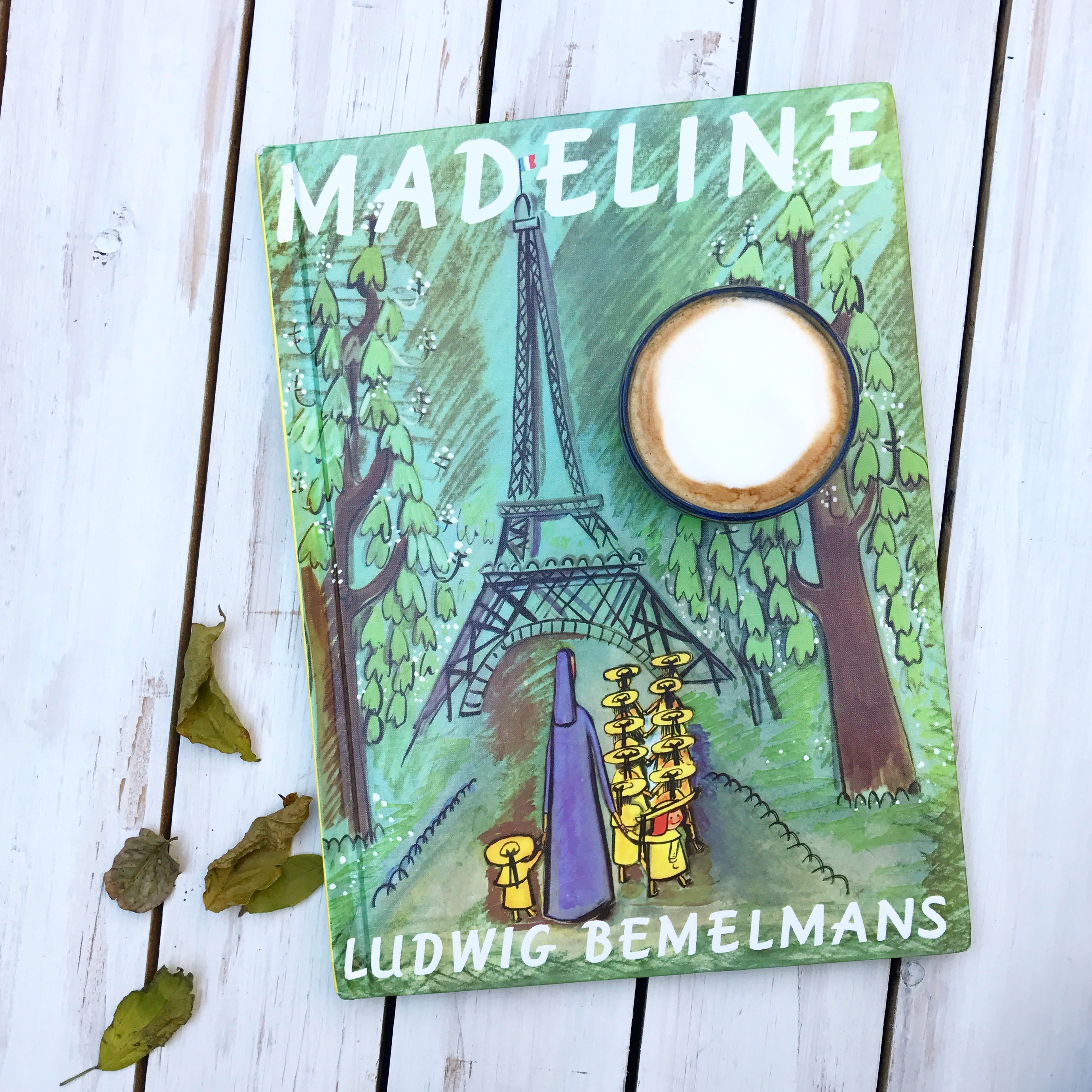
Madeleine is an adventure girl. Teachers, you know that student that has to hold your hand on all field trips? That’s Madeline. She is a relatable character with admirable traits like bravery, strength, and uniqueness. Just look how she is looking back at you on the front cover, that is your classic fun spunky student.

The language in this book is mythic and easy to follow. Perfect for a read-a-loud and quick to capture the imagination! The best part is that you can get to know Madeleine over the course of the over 15 picture and activity books that bear her name.

I’m not the only one who thinks it’s great. See the accolades here:

1940 Caldecott Honor

1990’s Toy of the Year Award

Character Focus Book

More on the book: http://www.madeline.com/

Continue Reading

We All Know How Hard Teachers Work, Right?

Each day teachers spend about 8 hours with his or her students. During the school day, teachers lead circle time, tie shoes, sing songs, resolve conflicts, provide reading instruction, play math games, and so much more. 8 hours a day is the usual work day for most adults with a full time job, but teachers do so much more!

Before the day. It would be impossible for a teacher to roll in at the same time as the children and be prepared for the day. Even if a teacher plans after school, there is a level of calm preparedness that teachers need while they start the day. Most teachers spend 1 hour before the school day starts readying their mind or classroom for the children. They may check messages from parents, prepare the environment, write a morning message, or organizing the upcoming day with colleagues.

b78f24898b361c664c1212bac196adef7cd1fd587740045f82339d7b4742d0b7-UQkiNR

After the children go, or on the weekend teachers spend about 3 hours fulfilling the administrative side of their job. Teachers grade, plan ,and prepare materials. They also complete continuing education hours, professional development course work, data entry, and meet with their coaches or principals.

orig

This hits a grand total of about 12 hours per work day for teachers. They have a big job! Thank you teachers.

Continue Reading

Bonus School aka Charter School

With all the election buzz today I have been thinking about a MA ballot issue on Charter Schools. Lucky for me, the most common question I get about the election is, “What exactly is a Charter School?” And, I love talking about schools!

A charter school is an independently run public school. That means that each school is established by a “charter” or mission. Charter schools are a great test field for educational reform. At a charter school, educators can try new curriculum, technology, or class size as long as it aligns with their charter. These schools are governed by an independent Board of Directors who answer to the state. Even though a charter school has no local school board, they must answer to state officials, that keeps the operations above the line. These schools are funded publicly through similar to how a regular public school is funded. Charter schools are funded based on enrollment. The district pays a per student stipend to the charter school to operate.

I like to think of them as bonus schools! Since I love school, I voted “Yes” for issue 2. cb-vote

When studying education I became enamored with charters. Especially the KIPP, Knowledge is Power Program and their story. Check them out here http://www.kipp.org/ The idea that a school can help break the cycle of poverty is something I believe. Teachers and schools can change the future.

If you are looking for a great non-fiction read about the origins of a charter school, and the inside scoop on a real educational change agent, pick up Born To Rise. It is my favorite motivational, teacher leader, shed a few tears, book.

btr

Continue Reading

Now it is November

We start off the school year with well intended plans. Before you know it we are writing the November poem on the board and counting down the days until Thanksgiving break.

November Desk

Now it is November,

Trees are nearly bare;

Red and gold and brown leaves

Scatter everywhere.


Dark now, are the mornings,

Cold and frosty too;

Damp and misty evenings

Chill us through and through


Busy are all creatures,

Winter food to hide;

Nests to make all cozy,

Warm and safe inside.

As I near the end of this week, it’s time to grab a coffee and review the plan.

time-coffee

Here are the 5 must do’s before the end of fall session at school.

  1. Say Hi. Check in with all parents. I had this dream of sending each family a photo of their child, happy at school, with in the first 60 days of school. Well that mark is nearing. I might not complete sending the pictures to everyone, but it is important to check in. Parents and children all need to know they belong at school.
  2. Team up. Set up winter events. At school we have an “Imaginary Trip,” “Winter Family Sing-a-Long,” and “Literacy Night” each of these events needs a teacher team to spear head the organization and implementation. This also give us a common goal going into the winter.
  3. Clear that drawer! Yes, you know the one. Where on Friday I put those last few things I didn’t get to during the week.
  4. Read. There is a revolving stack of educational books on my desk from parents and friends about education. It is time to pick one to finish by January.
  5. Appreciate. Think about all the help and support we’ve had to get to this point in the year. Shine a little gratitude on those team, family, and friends who have helped you get to this stage in the year.
Continue Reading